
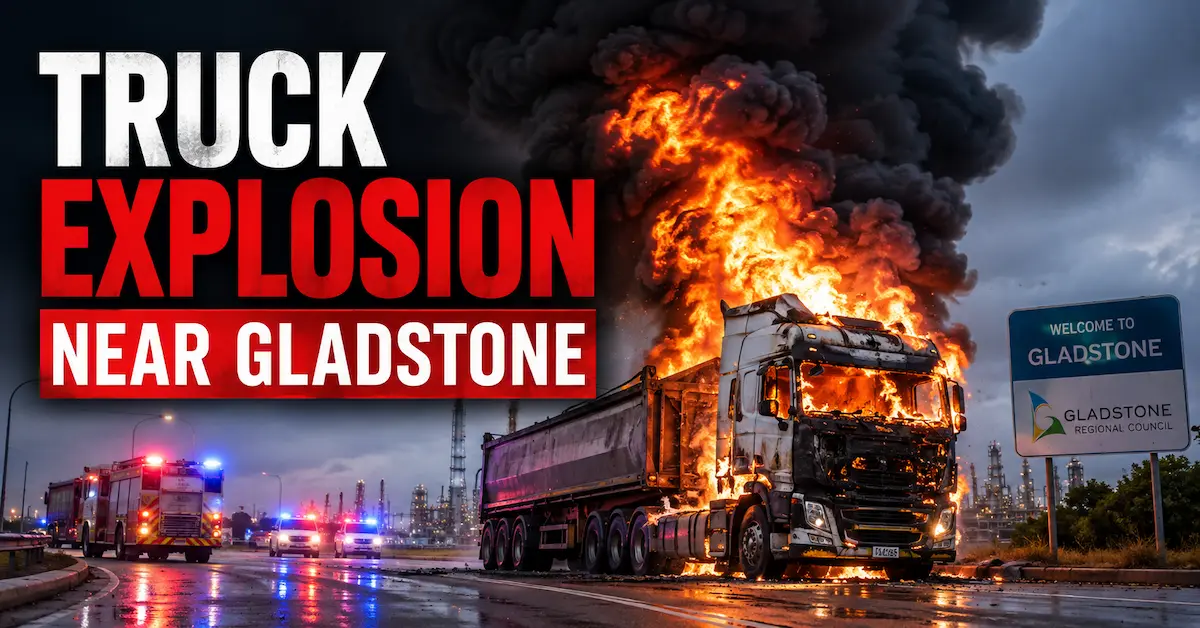
The truck explosion near Gladstone was a major road incident that caused significant disruption on Queensland’s Bruce Highway. The incident occurred near Bororen, south of Gladstone, after a truck carrying ammonium nitrate was involved in a collision with a ute. The subsequent explosion caused extensive damage to the highway and led to evacuations, road closures, traffic diversions, and delays.
For motorists, truck drivers, freight operators, and people travelling between Brisbane, Gladstone, Rockhampton and northern Queensland, the incident highlighted how quickly a serious heavy-vehicle crash can affect an entire transport corridor.
What Happened in the Truck Explosion Near Gladstone?
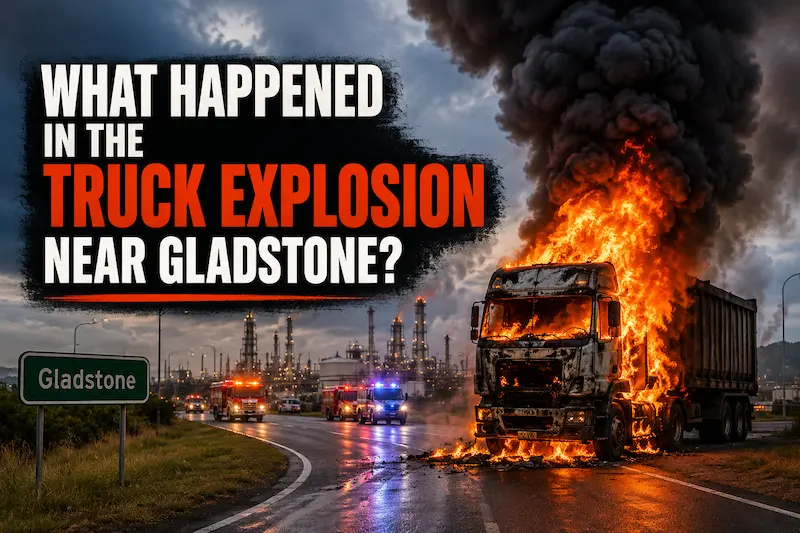
The incident happened on the Bruce Highway near Bororen, approximately 55 kilometres south of Gladstone.
According to reports, a truck carrying approximately 42 tonnes of ammonium nitrate collided with a utility vehicle early on 30 August 2024. The ute driver died at the scene, while the truck driver was seriously injured and taken to hospital.
The truck did not explode immediately. The chemical load later ignited, resulting in a powerful explosion that caused major damage to the surrounding area and highway.
Authorities established an exclusion zone while emergency services and specialist crews dealt with the dangerous scene.
Where Did the Explosion Occur?
The crash and explosion occurred near Bororen on the Bruce Highway, south of Gladstone in Central Queensland.
This location is important because the Bruce Highway is a major freight and passenger route connecting Queensland’s coastal communities. A serious incident at this point can therefore affect much more than local traffic.
How Serious Was the Highway Damage?
The explosion caused substantial damage to the Bruce Highway.
Reports described a crater approximately five metres deep in the roadway. The blast also affected nearby infrastructure and required extensive assessment and repair work before the highway could fully reopen.
The surrounding area also experienced damage from the blast. Residents reported broken windows, damaged doors, cracked ceilings and other effects from the shock wave.
Why Was the Bruce Highway Closed?
The highway could not simply be reopened after the fire was extinguished.
Authorities first had to make the area safe, assess the chemical and structural risks, inspect the road, and begin repairs. A large exclusion zone was also established around the incident.
The closure affected both directions between the Gin Gin and Calliope areas, forcing motorists to use alternative routes.
How Did the Incident Affect Truck Drivers?
The truck explosion near Gladstone created particularly difficult conditions for heavy-vehicle operators.
When a major highway is closed, trucks cannot always use the same alternative routes as cars. Heavy vehicles may face restrictions involving road width, bridge capacity, terrain, turning areas, and local road conditions.
Drivers should therefore avoid choosing an unfamiliar detour simply because it appears shorter on a navigation app.
Freight Delays Can Become Significant
The Bruce Highway is an important freight route, so a major closure can affect:
- Long-distance trucking
- Food and grocery deliveries
- Construction supplies
- Fuel and industrial products
- Regional freight movements
- Passenger transport
- Local businesses relying on regular deliveries
The incident demonstrated how one major crash can create delays far beyond the immediate crash location.
You may also like it:
Gladstone Truck: Repairs, Servicing & Breakdown Help
Used Truck Prices Gladstone: Buying Guide – Gladstone
Avis Truck Hire Gladstone | Truck Rental Guide
Truck Crash Near Gladstone: Road Safety Guide
What Should Drivers Do During a Major Highway Closure?
If you are travelling through the Gladstone region and encounter a major road closure, safety should come before saving a few minutes.
Follow Official Detour Directions
Always follow directions from police, traffic controllers and road authorities.
Do not enter a closed road, bypass barricades, or attempt to drive through an emergency exclusion zone.
Allow Extra Travel Time
A detour can add substantial time to a journey, especially for heavy vehicles.
Before leaving, check:
- Current road closures
- Heavy-vehicle restrictions
- Weather conditions
- Fuel availability
- Rest areas
- Traffic conditions
- Roadworks and temporary restrictions
Be Careful on Alternative Routes
When traffic is diverted from a major highway, smaller roads can suddenly experience much heavier traffic than usual.
This can increase risks for:
- Local residents
- Trucks and caravans
- Emergency vehicles
- Pedestrians
- Drivers unfamiliar with the road
Police previously warned motorists to adjust their speed and drive according to the conditions during the diversion period following the incident.
What Can Truck Operators Learn From the Incident?
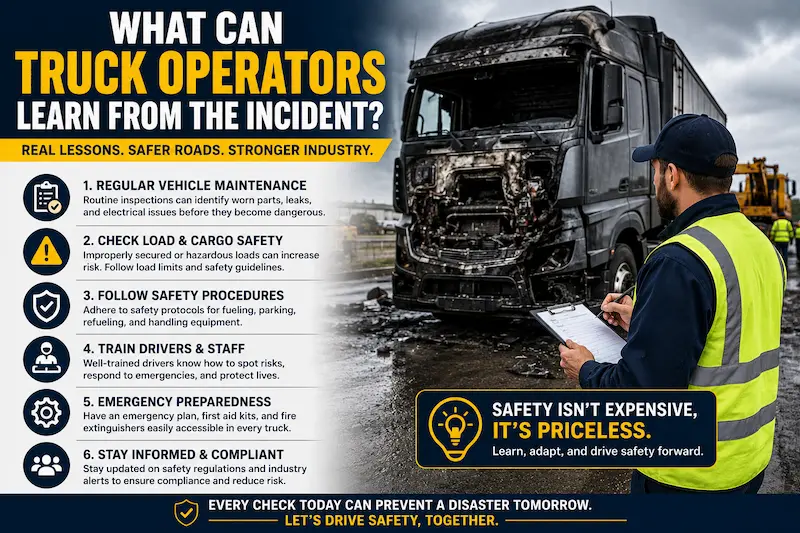
A serious truck crash is a reminder that heavy-vehicle safety involves more than maintaining the engine.
Fleet operators should take a broader approach to safety management.
Maintain Brakes and Steering Systems
Brake and steering faults can create serious risks, particularly when a truck is heavily loaded.
Regular inspections should cover relevant braking, steering and suspension components.
Check Tyres Before Long Trips
Truck tyres should be inspected for:
- Damage
- Uneven wear
- Incorrect inflation
- Tread condition
- Visible defects
A pre-trip inspection can identify problems before a vehicle reaches a major highway.
Inspect Fuel and Electrical Systems
Electrical faults, damaged wiring, fuel-system problems and overheating can contribute to vehicle fires.
Drivers should report unusual smells, smoke, warning lights, overheating or electrical problems rather than continuing to drive and hoping the issue disappears.
Know the Truck’s Load
Heavy-vehicle operators need to understand what their vehicle is carrying and ensure the load is handled, secured and transported according to applicable requirements.
This is especially important when transporting hazardous or regulated materials.
What Should You Do If Your Truck Develops a Problem Near Gladstone?
Not every roadside problem becomes an emergency, but continuing to drive with a serious mechanical fault can make the situation worse.
If a truck develops a mechanical problem:
- Move to a safe location if it is possible to do so.
- Activate hazard warning lights.
- Keep yourself away from moving traffic.
- Contact appropriate roadside or emergency assistance.
- Clearly explain the truck’s location and problem.
- Do not attempt repairs involving dangerous systems without the proper equipment and expertise.
If there is smoke, fire, a chemical leak, or another immediate danger, keep a safe distance and contact emergency services rather than attempting to repair the vehicle yourself.
Truck Breakdown Prevention Tips for Gladstone Drivers
Long-distance truck drivers can reduce the chance of roadside problems by carrying out basic checks before every major journey.
Before Leaving
Check:
- Engine oil and coolant levels
- Tyre condition and pressures
- Brakes
- Lights and indicators
- Battery and electrical connections
- Belts and hoses
- Warning lights
- Trailer connections
- Load security
During the Journey
Pay attention to changes in:
- Engine temperature
- Braking performance
- Steering
- Engine noise
- Exhaust smoke
- Dashboard warnings
- Vehicle handling
A problem that seems minor at the start of a journey can become much more serious if ignored.
Truck Explosion vs Truck Fire: Are They the Same?
No. A truck fire and a truck explosion are not necessarily the same event.
A truck fire may involve fuel, electrical components, tyres, cargo or other materials. An explosion can occur when particular hazardous substances or conditions create a rapid release of energy.
The circumstances surrounding the Gladstone-area incident were unusual because the truck was carrying a large quantity of ammonium nitrate. The explosion occurred after the crash and resulted in extensive damage to the road.
This is one reason hazardous-material incidents require specialist emergency response rather than ordinary roadside assistance.
Why Heavy-Vehicle Maintenance Matters
Preventive truck maintenance cannot eliminate every accident, but it can help identify mechanical problems before they become roadside emergencies.
For transport companies, a useful maintenance program should include:
- Scheduled servicing
- Pre-trip inspections
- Brake inspections
- Tyre checks
- Fluid checks
- Electrical inspections
- Fault-code diagnostics where appropriate
- Record keeping
- Prompt repairs when warning signs appear
Maintenance should follow the truck manufacturer’s requirements and the applicable heavy-vehicle safety obligations.
Frequently Asked Questions
Where did the truck explosion near Gladstone happen?
The incident occurred near Bororen on the Bruce Highway, approximately 55 kilometres south of Gladstone in Central Queensland.
What was the truck carrying?
The truck was carrying approximately 42 tonnes of ammonium nitrate when it crashed.
Was anyone killed in the crash?
Yes. The driver of the ute involved in the collision died at the scene. The truck driver was seriously injured and transported to hospital.
Why was the Bruce Highway closed?
The crash and subsequent explosion caused major road damage and created safety risks. Authorities needed to secure the area, assess the damage and carry out repairs before reopening the highway.
Did the explosion affect nearby residents?
Yes. An exclusion zone was established, and nearby residents were evacuated. Reports later described damage to homes from the blast, including broken windows and structural damage.
Conclusion
The truck explosion near Gladstone was a serious Central Queensland transport incident that demonstrated the potential consequences of a heavy-vehicle collision involving hazardous cargo. The crash caused loss of life, serious injury, extensive highway damage and major disruption to road and freight movements.
For truck operators and motorists, the key lessons are straightforward: maintain vehicles properly, complete safety checks before long trips, respect road closures, follow official detours and never underestimate the risks associated with damaged or hazardous vehicles.
