
If you are looking for dump truck training Gladstone, you may be considering a career in construction, civil works, quarrying, mining, or heavy transport. Proper training can help you learn how to operate a dump truck safely, understand workplace procedures, and prepare for jobs that require heavy vehicle or site-specific skills.
This guide explains what dump truck training involves, what to look for in a course, licence considerations, practical training, costs, and how to choose a suitable training provider in the Gladstone area.
Table of Contents
What Is Dump Truck Training?
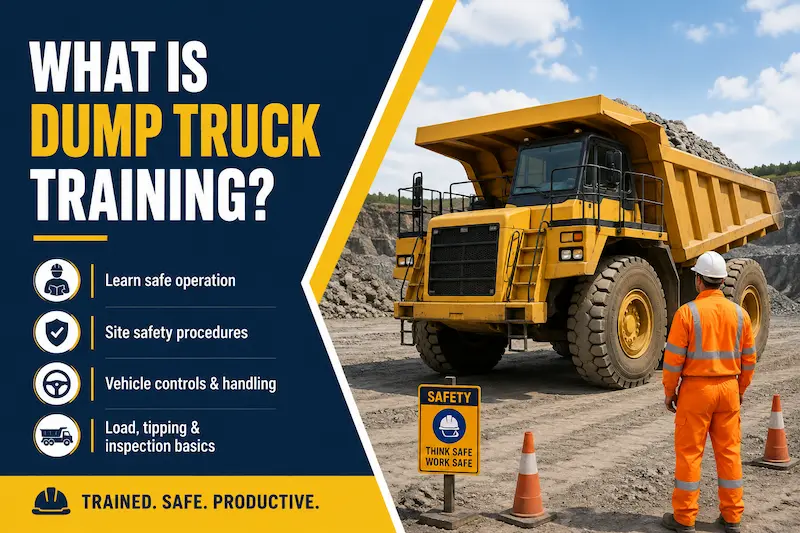
Dump truck training teaches operators how to safely control and use heavy vehicles designed to carry and unload materials such as:
- Soil and dirt
- Sand
- Gravel
- Rock
- Construction waste
- Quarry materials
- Other bulk loads
Training normally combines classroom or theory-based learning with practical instruction. Depending on the vehicle and workplace, students may learn pre-start inspections, controls, loading and unloading procedures, safe reversing, vehicle positioning, communication, and emergency procedures.
The exact training requirements depend on the type of dump truck, where it will be operated, and the employer’s workplace requirements.
Why Get Dump Truck Training in Gladstone?
Gladstone has a strong industrial and construction environment, so trained heavy equipment operators can be relevant to several industries.
Dump truck skills may be useful for work involving:
- Civil construction
- Road construction
- Earthmoving
- Quarries
- Mining-related operations
- Industrial projects
- Infrastructure projects
- Site preparation
- Material transport
Training can also give employers more confidence that a new operator understands basic safety procedures before working around other vehicles, machinery, workers, and materials.
What Does a Dump Truck Operator Do?
A dump truck operator has responsibilities beyond simply driving the vehicle.
Typical duties can include:
- Completing pre-start inspections.
- Checking tyres, brakes, lights, fluids, and other relevant components.
- Operating the truck according to workplace procedures.
- Loading materials without exceeding applicable limits.
- Transporting material around the worksite.
- Positioning the truck safely for unloading.
- Operating the tipping mechanism correctly.
- Maintaining awareness of pedestrians, machinery, structures, and other vehicles.
- Reporting faults or unsafe conditions.
- Completing required workplace documentation.
Good operators need patience, situational awareness, communication skills, and a strong commitment to safety.
Types of Dump Trucks You May Encounter
Not every dump truck is operated in exactly the same way.
Rigid Dump Trucks
Rigid dump trucks have a fixed chassis and are commonly used for transporting large quantities of material on construction, quarry, and industrial sites.
Articulated Dump Trucks
Articulated dump trucks have a joint between the cab and the dump body. They are designed to handle challenging terrain and are frequently used in earthmoving and large construction operations.
Site Dumpers
Smaller site dumpers may be used on construction projects where compact equipment is more appropriate.
Off-Road Dump Trucks
Large off-road trucks can be substantially different from road-going heavy vehicles. Their operating procedures, work environments, and training requirements may also differ.
Because equipment varies, you should confirm that your selected course covers the specific type of dump truck you expect to operate.
Dump Truck Training vs Heavy Vehicle Licence
One of the most important things to understand is that dump truck training and a road vehicle licence are not necessarily the same thing.
A training course may focus on operating heavy equipment in a workplace, while a heavy vehicle driver’s licence relates to driving certain vehicles on public roads.
If you intend to drive a truck on public roads, you may need an appropriate Queensland heavy vehicle licence. If you are operating specialised equipment on a private worksite, different requirements may apply.
Before enrolling, ask the training provider:
- What licence or statement of attainment is provided?
- Is the training for on-road driving, off-road operation, or both?
- What type of dump truck is covered?
- Does the course satisfy the requirements of the employer or worksite?
- Are there prerequisites?
- Is practical assessment included?
These questions can prevent you from paying for training that does not match the job you want.
What You Learn During Dump Truck Training
A quality course should provide both theoretical knowledge and practical experience appropriate to the equipment.
Pre-Start Inspections
You may learn how to inspect the truck before operation and identify obvious faults or hazards.
This can include checking:
- Tyres and wheels
- Braking systems
- Lights and warning devices
- Fluid levels
- Hydraulic components
- Safety equipment
- Steering and controls
- General vehicle condition
Safe Vehicle Operation
Training can cover starting, stopping, steering, changing direction, maintaining control, and operating the truck in different site conditions.
Loading and Unloading
Operators need to understand how to position the vehicle correctly and safely handle the tipping process.
Incorrect loading or unloading can create serious risks, particularly on uneven ground or near other workers and equipment.
Reversing
Reversing is a major part of heavy equipment operation.
Training may cover:
- Reversing techniques
- Blind spots
- Spotter communication
- Use of mirrors and cameras
- Pedestrian awareness
- Safe positioning
Tipping and Stability
Dump trucks can become unstable if operated incorrectly. Operators need to understand ground conditions, vehicle positioning, load distribution, and workplace procedures before tipping.
Safety Skills Matter as Much as Driving Skills
Being able to move a dump truck does not automatically make someone a competent operator.
A good training program should develop safe decision-making.
Important areas include:
- Blind-spot awareness
- Speed control
- Safe following distances
- Communication with other workers
- Hazard identification
- Working around pedestrians
- Operating near edges and slopes
- Safe tipping procedures
- Emergency response
- Fatigue awareness
Never operate unfamiliar equipment without appropriate instruction, authorisation, and workplace approval.
How Long Does Dump Truck Training Take?
There is no single training duration that applies to every dump truck course.
The time required can depend on:
- Your previous experience
- The type of dump truck
- The training provider
- The assessment requirements
- The number of practical hours
- Whether you are a beginner or experienced operator
- Employer-specific competency requirements
A complete beginner may need more practical instruction than an experienced operator who is completing familiarisation or competency assessment.
Always ask the provider for the expected course duration before booking.
You may also like it:
Gladstone Truck: Repairs, Servicing & Breakdown Help
Truck Explosion Near Gladstone: What Happened?
Avis Truck Hire Gladstone | Truck Rental Guide
Truck Crash Near Gladstone: Road Safety Guide
How Much Does Dump Truck Training Cost in Gladstone?
The price of training varies, so it is better to compare providers rather than rely on a single advertised figure.
Costs may depend on:
- Course length
- Equipment type
- Training location
- Practical training hours
- Assessment fees
- Whether equipment is supplied
- Private or group training
- Existing experience
- Additional licensing or assessment requirements
Some providers may offer individual training, while others provide group sessions for employers.
When comparing prices, check exactly what is included. A cheaper course is not necessarily better if it provides less practical training or does not meet your intended workplace requirements.
How to Choose a Dump Truck Training Provider
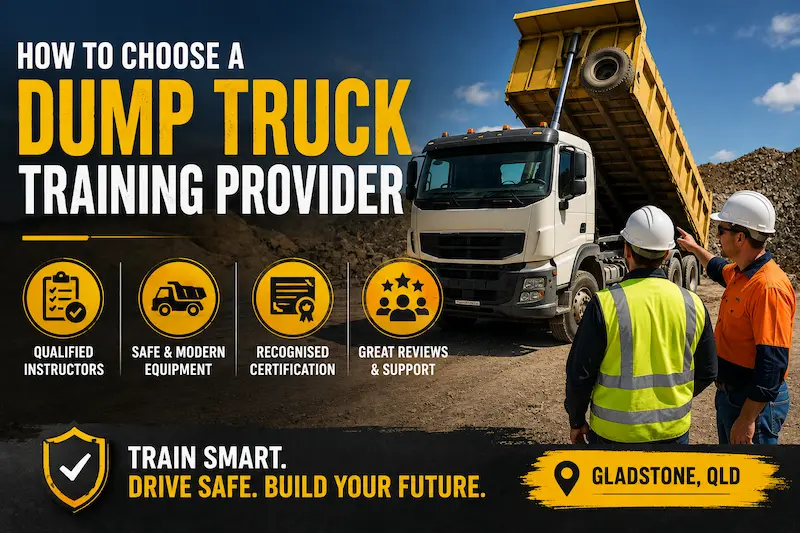
Choosing the right provider is one of the most important parts of your training.
Check the Training Provider
Make sure the provider is appropriately authorised or registered for the training they advertise and can explain what credential or evidence of competency you will receive.
Ask About Practical Training
Dump truck operation is a practical skill. Ask how much time you will actually spend operating the machine rather than only completing theory.
Confirm the Equipment
Ask what make, model, and type of dump truck will be used. If possible, choose training that is relevant to the equipment you expect to encounter at work.
Check the Assessment Process
Find out how competency is assessed and what happens if you need additional practice before assessment.
Ask About Worksite Requirements
If you already have a potential employer, ask them what qualifications, licences, tickets, or site competencies they require before booking a course.
What Should You Bring to Training?
Your provider should give you a complete list of requirements, but you may need suitable work clothing and personal protective equipment.
Depending on the training environment, this may include:
- Safety footwear
- High-visibility clothing
- Appropriate work clothing
- Safety glasses
- Hearing protection where required
- Other site-specific PPE
You may also need identification or documents requested by the training organisation.
Who Can Benefit From Dump Truck Training?
Dump truck training may suit people who want to enter or progress in industries such as:
- Construction
- Civil works
- Earthmoving
- Quarry operations
- Mining-related work
- Infrastructure
- Heavy equipment operation
It can also be useful for existing workers who need formal competency assessment or training on a different type of equipment.
Dump Truck Training for Beginners
You do not necessarily need years of heavy equipment experience to begin learning.
For beginners, a good starting point is a course that provides:
- Basic machine familiarisation
- Supervised practical operation
- Safety instruction
- Pre-start inspection training
- Loading and unloading practice
- Reversing instruction
- Assessment and feedback
Do not choose a provider solely because it promises the fastest possible qualification. Understanding how to operate heavy machinery safely is more important than completing training as quickly as possible.
Experienced Operators: Recognition of Existing Skills
If you have already operated dump trucks, you may not need exactly the same training as a complete beginner.
Ask whether the provider offers an assessment of existing skills or a pathway for experienced operators.
You may still need to demonstrate that you can safely and competently perform the required tasks.
Common Mistakes to Avoid
Before booking dump truck training, avoid these common mistakes.
Choosing a Course Without Checking the Equipment
A course covering one type of machine may not prepare you for every other type of dump truck.
Assuming a Training Certificate Is a Road Licence
Worksite equipment training and a Queensland heavy vehicle licence can serve different purposes.
Focusing Only on Price
Compare practical training, assessment, equipment, trainer experience, and what documentation you receive.
Ignoring Employer Requirements
Your future employer may have additional site induction, competency, or licensing requirements.
Treating Safety Training as a Formality
Heavy equipment can cause serious injuries or property damage when operated incorrectly. Take every safety procedure seriously.
A Simple Checklist Before Booking
Use this checklist when comparing dump truck training options in Gladstone:
- Confirm the exact type of dump truck covered.
- Check prerequisites.
- Ask whether practical training is included.
- Confirm the assessment process.
- Ask what qualification or evidence you receive.
- Check whether the training meets your employer’s requirements.
- Ask for the complete course price.
- Confirm what PPE you need.
- Ask how long the training normally takes.
- Check whether additional training is available if required.
Career Opportunities After Training
Dump truck operation can form part of a broader heavy equipment career.
Depending on your qualifications and experience, you may eventually explore roles involving:
- Dump truck operation
- Civil construction equipment
- Earthmoving machinery
- Quarry equipment
- Site operations
- Heavy equipment operation
- Mining-related machinery
Additional training and workplace experience may help you qualify for other machinery and responsibilities over time.
FAQs: Dump Truck Training Gladstone
Do I need a licence for dump truck training in Gladstone?
It depends on the dump truck and where you will operate it. Road-going vehicles and specialised workplace equipment can have different requirements. Confirm the applicable requirements with the training provider and, where relevant, the employer.
Can beginners take dump truck training?
Yes, many training programs are designed to teach people with limited experience. However, eligibility and prerequisites vary between providers.
Is dump truck training the same as truck driving training?
No. Dump truck training generally focuses on operating dump equipment, often in a worksite environment. Road truck driving involves different vehicle and licensing requirements.
Can dump truck training help me get a job?
Training can provide useful evidence of skills, but employment is not guaranteed. Employers may also require experience, additional tickets, site inductions, medical or fitness requirements, and other qualifications depending on the role.
Conclusion
Finding the right dump truck training Gladstone option is about more than obtaining a certificate. You should choose training that matches the equipment you intend to operate, provides meaningful practical instruction, explains safety procedures clearly, and meets the requirements of your target workplace.
Compare providers carefully, confirm licensing and competency requirements, and speak with potential employers before enrolling so your training investment supports your career goals.
