

Introduction
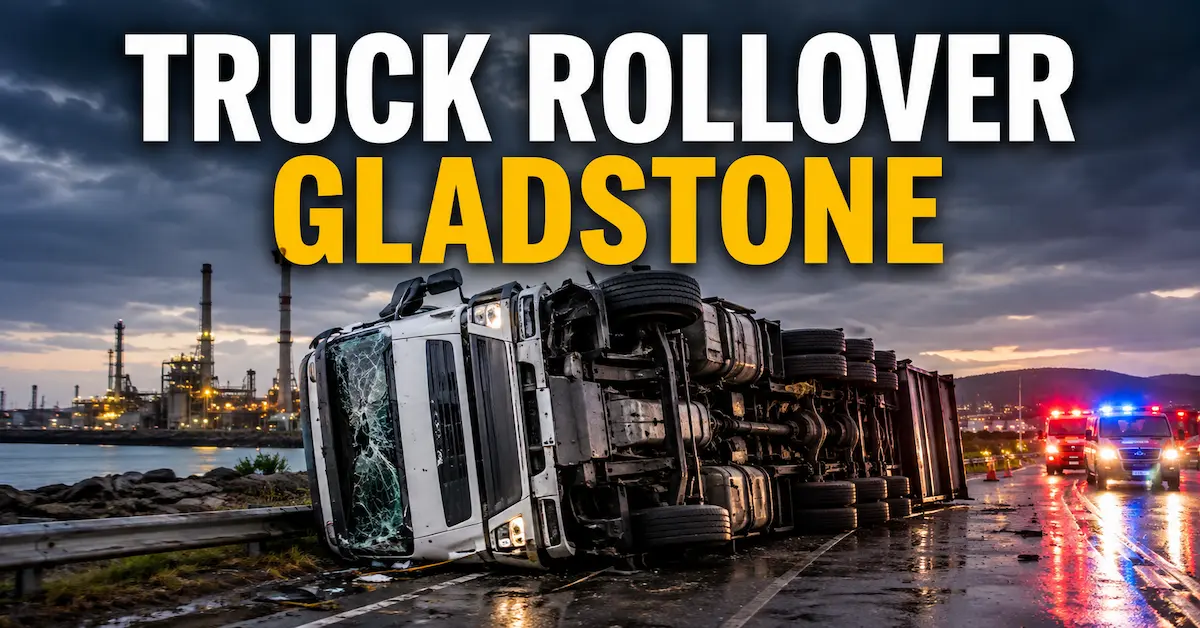
A truck rollover Gladstone can be a serious road incident because heavy vehicles can block traffic, spill cargo or fuel, damage other vehicles, and create additional hazards for motorists and emergency crews. Gladstone and the surrounding Central Queensland region have important freight routes, including sections of the Bruce Highway, where trucks regularly travel long distances.
If you are searching for information about a truck rollover in Gladstone, you may want to know what causes these crashes, which roads can be affected, what drivers should do when approaching a rollover, and where to find reliable traffic information.
This guide explains the main issues without assuming that every rollover has the same cause. The circumstances of an individual crash should be confirmed through official authorities rather than online speculation.
Table of Contents
What Is a Truck Rollover?
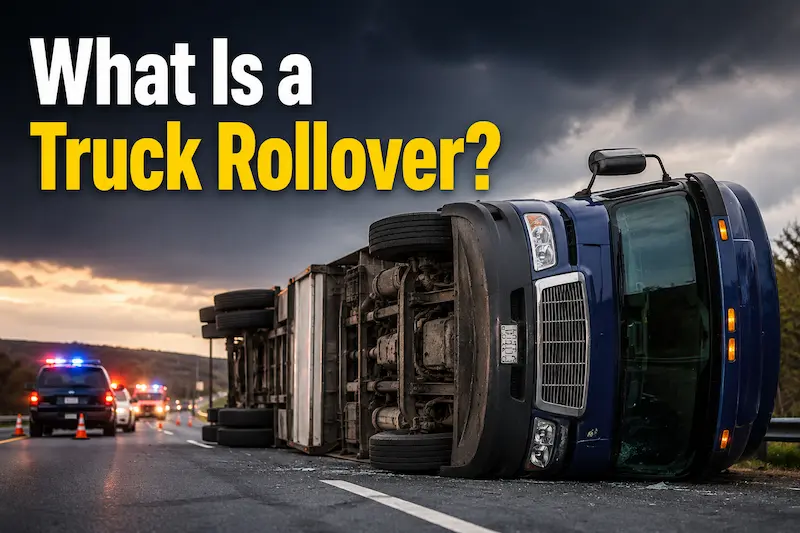
A truck rollover occurs when a heavy vehicle tips onto its side or, in some cases, overturns completely.
The incident can involve:
- A rigid truck
- Semi-trailer or articulated truck
- Car carrier
- Tanker
- Livestock transporter
- Road train
- Other heavy commercial vehicles
A rollover may happen without another vehicle being involved. It can also occur after a truck loses control, leaves the road, collides with another vehicle or encounters a dangerous road condition.
The consequences can extend beyond the truck itself. Cargo may be scattered across lanes, fuel or other substances may leak, and damaged infrastructure may require emergency repairs.
Why Truck Rollovers Can Happen Around Gladstone
There is rarely one universal cause. Investigators may consider the driver’s actions, vehicle condition, load, road environment and weather.
Speed and Loss of Control
Heavy vehicles have substantial mass and require more distance and time to change speed or direction.
Excessive speed when approaching a bend, roundabout, intersection or changing road condition can increase the risk of losing control.
Queensland heavy-vehicle rules also require appropriate use of lower gears on steep routes so drivers can control speed without relying entirely on the primary brakes.
Uneven or Poor Road Conditions
A truck can become unstable when a wheel leaves the sealed road and encounters a soft shoulder, steep edge or significant change in surface level.
Queensland’s route-assessment guidance specifically recognises that some roadside slopes can increase the potential for a heavy vehicle to roll over if it leaves the carriageway.
Load Distribution
The way cargo is positioned and secured can affect vehicle stability.
An improperly distributed or inadequately secured load may shift during braking, cornering or sudden manoeuvres. Heavy-vehicle safety guidance highlights even load distribution as an important rollover control in relevant operations.
Sharp Turns and Sudden Manoeuvres
Turning too quickly, swerving to avoid an obstacle or making an abrupt steering correction can create significant instability.
The risk can be greater when a vehicle is carrying a high or uneven load.
Wet Weather
Rain can reduce tyre grip and make road surfaces more difficult to manage.
Drivers should reduce speed and allow additional stopping distance when visibility or road conditions deteriorate. Queensland road-safety guidance recommends increasing following distances during weather that reduces visibility.
Driver Fatigue or Inattention
Long-distance freight travel requires careful fatigue management. A fatigued driver may have slower reaction times or difficulty maintaining control.
Fatigue is therefore an important consideration whenever heavy vehicles are travelling long distances, although it should never be assumed to be the cause of a particular Gladstone crash unless authorities establish it.
What Should You Do If You Encounter a Truck Rollover?
If you come across a rollover on the road, your first priority should be to protect yourself and avoid creating a second collision.
1. Slow Down Early
Do not wait until you are immediately beside the crash before reducing speed.
Watch for:
- Emergency vehicles
- Police
- Traffic controllers
- Debris
- Spilled cargo
- Fluid on the road
- Damaged barriers
- Queuing traffic
2. Give the Crash Scene Plenty of Space
Do not stop unnecessarily close to an overturned truck.
Emergency crews may need considerable room for ambulances, fire appliances, recovery vehicles and other equipment.
3. Do Not Drive Through Debris
A rollover can leave metal, cargo, broken vehicle components or other objects across the roadway.
If debris is in your lane, slow down and follow directions from police or traffic controllers rather than attempting a risky manoeuvre.
4. Follow Official Traffic Directions
Road closures and lane restrictions can change as emergency crews assess and clear the scene.
QLDTraffic provides current information about Queensland road conditions, including restrictions affecting heavy-vehicle routes.
For the most reliable information, check official traffic sources rather than relying solely on social-media posts.
5. Never Approach a Leaking Truck
If you notice fuel, chemicals or another potentially dangerous substance leaking from a damaged truck, keep your distance.
Do not smoke, use a flame or attempt to investigate the substance yourself.
You may also like it:
Budget Truck Rentals Gladstone | Hire Guide
Truck Crash Today Near Gladstone Central Qld
Truck Licence Gladstone: Classes, Requirements & Training
Truck Accidents Lawyer Gladstone | Legal Guide
What If You Are the First Person at the Scene?
If you arrive immediately after a truck rollover and no emergency crews are present, take sensible precautions.
- Stop somewhere safe and away from the crash if possible.
- Contact emergency services if people are injured or the road is dangerous.
- Tell the operator the location as accurately as you can.
- Warn other motorists only if you can do so without putting yourself in danger.
- Do not enter an overturned truck unless there is an immediate life-threatening emergency and you can do so safely.
- Avoid touching spilled substances or damaged electrical equipment.
- Follow instructions from emergency personnel when they arrive.
Your role is to help prevent another crash, not to manage the wreck yourself.
How Truck Rollovers Can Affect Gladstone Traffic
A rollover involving a heavy vehicle can cause more than a short traffic delay.
Depending on the location and circumstances, authorities may need to:
- Close one or more lanes
- Stop traffic completely
- Remove damaged vehicles
- Recover spilled cargo
- Clean the roadway
- Repair damaged road infrastructure
- Investigate the crash
- Manage traffic around the recovery operation
The cleanup can take longer than the initial emergency response because heavy trucks require specialised recovery equipment.
Roads and Freight Routes Around Gladstone
Gladstone is an important industrial and freight centre in Central Queensland. Heavy vehicles operate throughout the region, including on major routes connecting Gladstone with Rockhampton, Miriam Vale and other parts of Queensland.
The Bruce Highway is particularly important for regional freight traffic.
However, it is important not to assume that a search for truck rollover Gladstone refers to one particular location. A reported crash could occur within Gladstone itself or on a nearby section of the regional road network.
If you are travelling through the area, check the current road conditions before leaving and again if severe weather or an incident is reported.
How Drivers Can Reduce the Risk of a Rollover
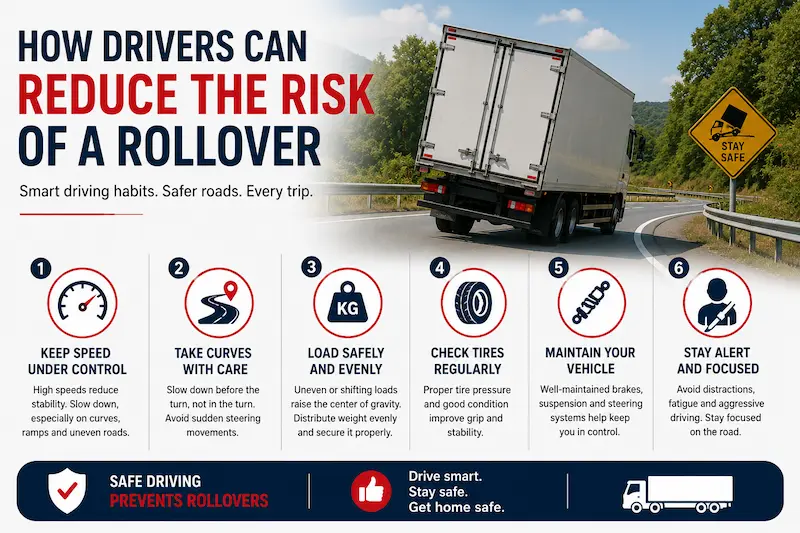
Truck operators can take several practical precautions.
Before Starting the Trip
Check:
- Tyres and tyre pressures
- Brakes
- Steering components
- Lights
- Suspension
- Load restraints
- Cargo distribution
- Trailer connections
- Vehicle dimensions and weight compliance
A proper pre-trip inspection can identify problems before the vehicle reaches the highway.
During the Journey
Drivers should:
- Select an appropriate speed for conditions
- Use appropriate gears on steep sections
- Maintain a safe following distance
- Take corners carefully
- Avoid sudden steering movements
- Monitor changing weather
- Take appropriate fatigue-management breaks
- Reassess conditions when roads become wet or visibility falls
Queensland’s heavy-vehicle rules include requirements concerning following distances, load limits and low-gear use.
How Car Drivers Should Share the Road With Trucks
Truck safety is not only the responsibility of truck drivers.
Queensland guidance notes that heavy vehicles have larger blind spots, need more room to turn and generally require more space to stop than smaller vehicles.
If you are driving a car near a truck:
- Keep a safe following distance.
- Avoid sitting beside a truck in its blind spot.
- Do not cut sharply in front of a heavy vehicle.
- Give trucks extra room when they turn.
- Be particularly careful when overtaking.
- Allow for strong wind when passing a large vehicle.
- Never attempt an unsafe overtake simply because you are in a hurry.
A useful rule is that if you cannot see the truck driver’s mirrors, there is a good chance the driver cannot see you.
What Happens After a Serious Truck Rollover?
A serious rollover may involve several stages of response.
Emergency Response
Police, ambulance and fire and rescue personnel may attend depending on the circumstances.
Their priorities can include:
- Treating injured people
- Securing the crash site
- Controlling traffic
- Managing hazards
- Preventing further collisions
Vehicle Recovery
A heavily loaded truck generally cannot simply be moved with an ordinary tow vehicle.
Specialist recovery equipment may be needed to stabilise, lift or tow the vehicle.
Crash Investigation
Police or other relevant authorities may investigate the circumstances of a serious collision.
Potential factors can include:
- Vehicle condition
- Driver behaviour
- Road conditions
- Weather
- Load configuration
- Mechanical issues
- Other vehicles
- Road layout
The actual cause should be based on evidence rather than assumptions made from photographs or social-media reports.
What If You Were Injured in a Truck Rollover?
If you were involved in a truck rollover, seek appropriate medical attention even if your injuries initially appear minor.
After receiving necessary care, consider preserving useful information such as:
- Photographs of vehicle damage
- Photographs of the road and surrounding area
- Names and contact details of witnesses
- Police or incident information
- Medical records
- Repair or towing documentation
- Insurance correspondence
If you believe another party may be legally responsible for your injuries or losses, obtaining independent legal advice can help you understand your options.
Do not assume that every truck crash automatically results in a successful compensation claim. Liability depends on the circumstances and available evidence.
Where to Find Reliable Gladstone Road Information
For a current incident, use official sources whenever possible.
Queensland’s road-safety resources provide information about crashes and road safety, while QLDTraffic provides road-condition and traffic information.
For a reported truck rollover Gladstone, these sources are more useful than relying on an old article or an unverified social-media post.
If the incident is happening right now, avoid travelling toward the crash simply to see what happened. Use official traffic information to determine whether you need to change your route.
Truck Rollover Safety: Quick Checklist
For motorists approaching a rollover
- Slow down.
- Expect sudden traffic queues.
- Keep a safe distance from the crash.
- Watch for emergency workers.
- Do not drive over debris.
- Follow police and traffic-controller directions.
- Avoid stopping to take photographs.
- Use an alternative route when authorities recommend one.
For truck operators
- Check the vehicle before departure.
- Secure and distribute the load correctly.
- Adjust speed for curves and weather.
- Maintain appropriate following distance.
- Use suitable gears on steep sections.
- Manage fatigue properly.
- Avoid sudden steering corrections.
- Stop and reassess if conditions become unsafe.
Frequently Asked Questions
What causes a truck rollover in Gladstone?
Possible causes include excessive speed, sudden steering, wet roads, uneven surfaces, load instability, mechanical problems, driver fatigue and collisions. The actual cause of a particular crash must be established from the evidence.
Is a truck rollover always caused by the truck driver?
No. A rollover can involve several contributing factors, including road conditions, weather, vehicle defects, cargo issues and interactions with other vehicles. Responsibility should not be assumed before an investigation.
What should I do if a truck has rolled over on the highway?
Slow down, keep away from the crash scene, watch for debris and emergency workers, and follow official traffic directions. If the road is closed, use an alternative route rather than attempting to pass through the incident area.
Can a truck rollover close a major road?
Yes. A heavy vehicle can block multiple lanes, and authorities may need to close the road while the truck, cargo and debris are removed.
Where can I check road closures around Gladstone?
QLDTraffic is an appropriate official source for Queensland traffic and road-condition information. Its heavy-vehicle resources also provide information relevant to freight operators.
Conclusion
A truck rollover Gladstone can create serious risks for truck drivers, passengers, other motorists and emergency workers. Understanding the causes of rollovers and knowing how to respond around an overturned heavy vehicle can help prevent a second crash. For current incidents, always rely on official Queensland traffic and emergency information rather than assuming details from unverified reports.
If you encounter a truck rollover Gladstone, slow down, keep your distance, follow traffic directions and put safety first.
