

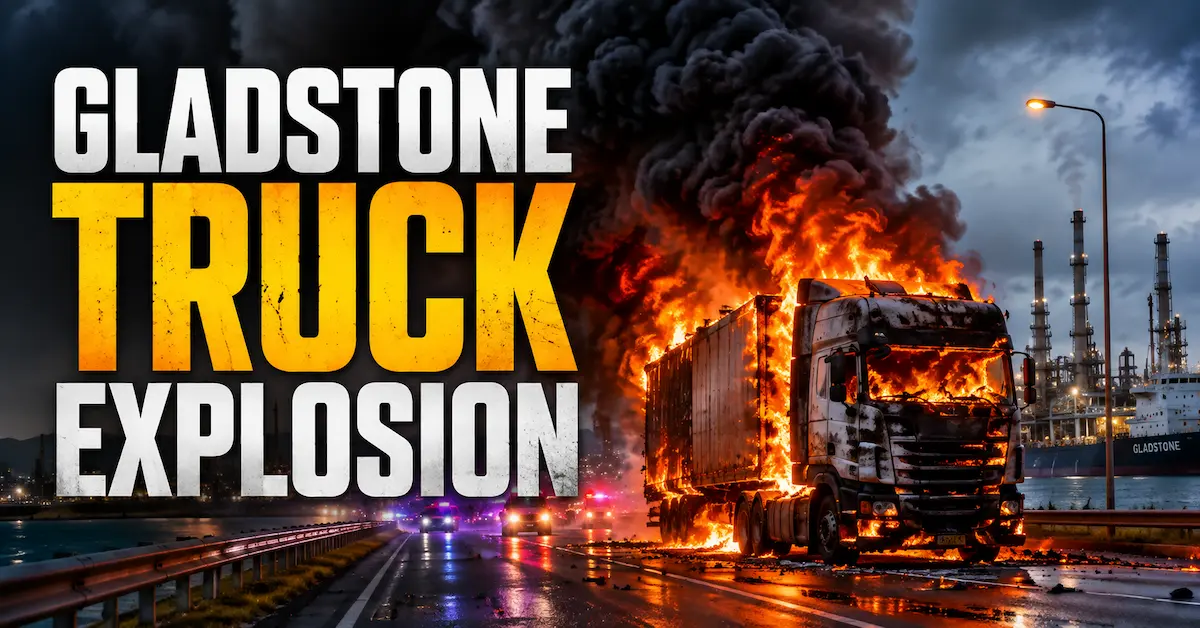
If you are searching for gladstone truck explosion, you are most likely looking for information about the major truck explosion on the Bruce Highway south of Gladstone, Queensland, near Bororen, in August 2024. The incident involved a truck carrying ammonium nitrate that crashed into a ute, followed by a powerful explosion that seriously damaged the highway and affected nearby residents and transport routes.
This was more than an ordinary truck crash. The combination of a heavy vehicle, hazardous cargo, fire, and a major transport route created a complex emergency that required evacuations, road closures, traffic diversions, infrastructure repairs, and specialist response.
This guide explains what happened, why the explosion was so serious, how hazardous-material truck incidents are managed, and what drivers can learn from the event.
Table of Contents
What Happened in the Gladstone Truck Explosion?
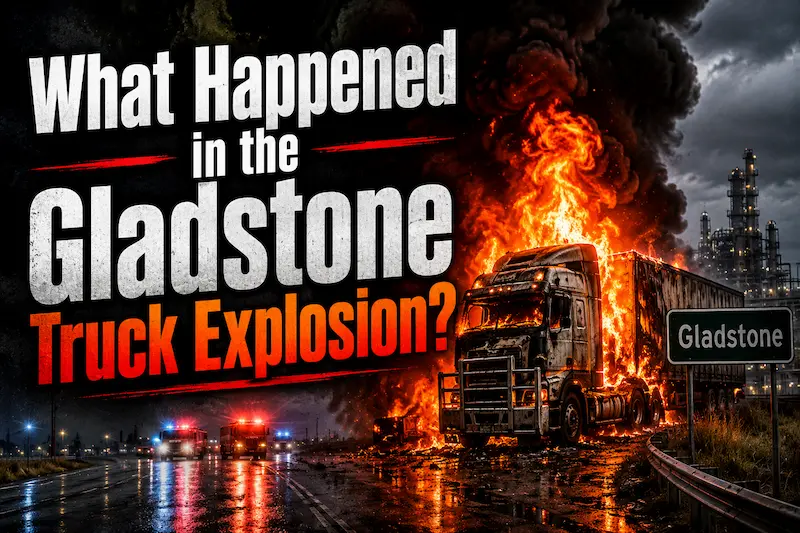
The incident occurred on the Bruce Highway near Bororen, south of Gladstone, Queensland.
According to ABC News, a truck carrying approximately 42 tonnes of ammonium nitrate collided with a ute early on Friday, August 30, 2024. The driver of the ute died at the scene, while the truck driver was seriously injured and taken to hospital.
The truck later caught fire and exploded.
The explosion caused extensive damage to the surrounding area, including a large crater beside the highway. Authorities also established an exclusion zone while emergency and specialist teams assessed the site.
Where Did the Explosion Occur?
The crash happened near Bororen, approximately 55 kilometres south of Gladstone.
Although the location was outside Gladstone itself, the incident became closely associated with the Gladstone region because of its proximity to the city and the major disruption it caused to transport through Central Queensland.
Why Was the Truck Carrying Ammonium Nitrate?
Ammonium nitrate is an industrial chemical widely used in areas such as mining and agriculture. Transporting large quantities requires appropriate safety controls because hazardous materials can create significantly greater risks when involved in a serious collision or fire.
The truck involved in this incident was carrying a large quantity of the material, making the crash substantially more complicated than a conventional truck accident.
It is important not to assume that every truck carrying chemicals is automatically at risk of exploding. The danger depends on the material, its condition, the circumstances of the crash, fire exposure, containment, and other factors.
Why Was the Explosion So Powerful?
The severity of the incident was influenced by several factors occurring together:
- A heavy truck collision
- A large quantity of hazardous material
- Fire following the crash
- The location beside a major highway
- Nearby infrastructure, including the railway
- The need to keep emergency personnel away from an unstable scene
ABC reported that the explosion created a crater about five metres across/deep in the damaged highway area and caused significant infrastructure damage.
Emergency crews therefore had to balance the need to control the incident with the risk of approaching a vehicle carrying dangerous cargo.
Road Closures After the Truck Explosion
One of the most significant consequences was the closure of the Bruce Highway.
The highway was closed in both directions between Gin Gin and Calliope, forcing motorists to use lengthy diversion routes. Authorities warned that the detours could add several hours to journeys between major Queensland destinations.
The closure affected much more than individual motorists.
It disrupted:
- Freight transport
- Passenger travel
- Local workers
- School travel
- Regional businesses
- Supply chains
- Rail operations
The incident demonstrated how vulnerable regional transport networks can be when a major highway is suddenly unavailable.
How Did the Explosion Affect Nearby Residents?
The blast was powerful enough to affect properties in the surrounding area.
Residents near the crash site reported damage including broken windows, damaged doors, cracked walls and ceilings, and debris. Some people were required to leave their homes while authorities established a large exclusion zone.
At one stage, an exclusion zone extending approximately 2.5 kilometres was established around the incident area. This was a precaution designed to keep people away from a potentially dangerous hazardous-material scene.
Why Were People Evacuated?
Evacuation decisions during hazardous-material incidents are based on the potential consequences of remaining nearby.
Emergency authorities may consider:
- The type of material involved
- Fire and explosion risk
- Wind and environmental conditions
- Distance from the incident
- Possibility of additional explosions
- Structural and infrastructure damage
- Access requirements for emergency crews
People should always follow official evacuation instructions rather than approaching a truck fire or chemical spill to investigate.
What Happened to the Bruce Highway?
The explosion caused significant damage to the highway and required specialist assessment and repair work before the road could fully reopen.
Authorities had to inspect the damaged road infrastructure, clean up the affected area, and make the route safe for traffic. The highway eventually reopened under controlled conditions after repair work was completed.
The damage illustrates an important point: a truck explosion can continue affecting transportation long after the flames disappear.
How Did the Incident Affect Rail Transport?
The impact was not limited to road traffic.
The North Coast railway line was also affected during the emergency response and infrastructure repairs. Freight and passenger movements were disrupted while work was carried out around the incident area.
For Central Queensland, this was particularly important because road and rail networks work together to move people, food, industrial products, and other freight.
You may also like it:
Truck Crash Near Gladstone: Road Safety Guide
Dump Truck Training Gladstone | Course Guide
Truck Jobs Gladstone: Find Local Truck Driving Work
Truck Explosion Gladstone: What Happened & Safety Guide
What Should Drivers Do When They Encounter a Truck Fire?
If you see a truck on fire, particularly a tanker or vehicle carrying dangerous goods, do not treat it like an ordinary roadside breakdown.
Keep Your Distance
Move away from the vehicle and avoid stopping close to the fire.
A burning truck may contain fuel, gas, chemicals, batteries, compressed materials, or other dangerous cargo.
Follow Police and Emergency Instructions
Traffic controllers and emergency responders may establish exclusion zones or close roads.
Do not drive around barricades or enter restricted areas.
Do Not Try to Fight a Dangerous Truck Fire Yourself
A fire extinguisher may be useful for certain small vehicle fires, but approaching a large truck fire can be extremely dangerous.
If hazardous materials are involved, trained emergency personnel should handle the situation.
Use Official Detours
When a major highway is closed, follow signed diversion routes and current instructions from authorities.
Trying to find an unofficial shortcut can create additional safety problems, particularly when heavy vehicles are being redirected onto roads that are not designed for large freight traffic.
What Can Truck Operators Learn From the Incident?
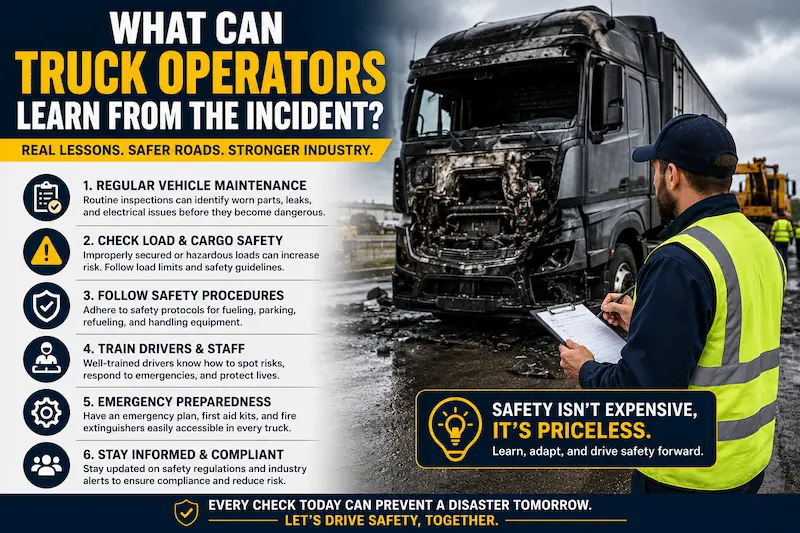
The gladstone truck explosion also highlights important lessons for transport operators.
Know the Cargo
Drivers and operators need accurate information about the materials being transported and the appropriate emergency procedures.
Hazardous-material transport requires a higher level of planning than ordinary freight.
Maintain the Truck and Trailer
Routine inspections can help identify mechanical issues before they contribute to a roadside emergency.
Maintenance should cover areas such as:
- Braking systems
- Tyres and wheels
- Electrical systems
- Fuel systems
- Couplings
- Suspension
- Engine components
- Trailer equipment
- Safety equipment
Plan Emergency Procedures
Transport companies should have clear procedures for crashes, fires, breakdowns, and hazardous-material incidents.
Drivers should know whom to contact and what information emergency responders may need.
Avoid Unnecessary Risk After a Crash
A damaged truck should not automatically be restarted or moved.
If the vehicle is carrying hazardous cargo, the safest response may require specialist assessment before anyone approaches or attempts recovery.
Why Regular Truck Maintenance Matters
Preventive maintenance cannot eliminate every accident, but it can help reduce mechanical failures and improve vehicle reliability.
A sensible maintenance program should include:
- Scheduled servicing based on manufacturer requirements.
- Regular brake inspections.
- Tyre and wheel checks.
- Inspection of electrical and fuel systems.
- Trailer and coupling inspections.
- Prompt investigation of warning lights and unusual noises.
- Accurate maintenance records.
- Driver pre-start inspections.
For fleet operators, maintenance is not simply about avoiding repair bills. It is also part of responsible road safety management.
Truck Explosion vs. Truck Fire: What’s the Difference?
A truck fire does not necessarily result in an explosion.
| Situation | Potential concern |
| Engine fire | Heat, smoke and vehicle damage |
| Fuel fire | Rapidly spreading flames and intense heat |
| Tyre fire | High heat and possible tyre failure |
| Battery fire | Heat, smoke and difficult fire behaviour depending on battery type |
| Chemical cargo fire | Potentially serious hazardous-material emergency |
| Pressurised container fire | Potential rupture or explosion risk |
The exact risk depends on the truck, its cargo, the condition of the vehicle, and the circumstances surrounding the fire.
Is It Safe to Drive Near a Truck Carrying Dangerous Goods?
Large trucks carrying hazardous materials operate on Australian roads under regulatory and safety requirements.
However, motorists should still maintain a safe following distance and avoid unnecessary interaction with a damaged or burning vehicle.
If a truck carrying dangerous goods is involved in a crash:
- Slow down when approaching the scene.
- Follow police directions.
- Do not stop unnecessarily.
- Avoid driving through smoke or spilled material.
- Keep emergency lanes clear.
- Use an alternative route when instructed.
If you are unsure about the situation, treat the scene as potentially hazardous and wait for official guidance.
What Should You Do After a Truck Accident?
If you are involved in a truck collision, your first priority should be safety.
If You Can Move Safely
Move to a safe location away from traffic and the damaged vehicles.
Turn on hazard lights when appropriate and follow emergency instructions.
Call Emergency Services
Report the crash and provide the location as accurately as possible.
Tell responders if you know that dangerous goods, fuel, chemicals, or other hazardous materials are involved.
Avoid the Cargo
Do not touch leaking containers, spilled substances, damaged tanks, or unknown materials.
Even if a substance looks harmless, you should not assume that it is safe.
Document the Incident Only From a Safe Location
If conditions are safe, relevant photographs and information can later help with insurance or investigations.
Never put yourself in danger simply to obtain a photograph.
What Made This Incident Different From a Normal Truck Accident?
The key difference was the combination of collision, hazardous cargo, fire, and explosion.
A normal truck crash can already require police, ambulance, towing, traffic management, and road repairs. A hazardous-material explosion can add:
- Large exclusion zones
- Specialist hazardous-material teams
- Evacuations
- Environmental assessment
- Infrastructure inspections
- Long-term road closures
- Complex vehicle recovery
- Major traffic diversions
The 2024 incident near Gladstone showed how quickly a single crash can develop into a regional transport emergency.
Are There Other Truck Fires in the Gladstone Region?
Yes. Truck fires and other heavy-vehicle incidents can occur independently of the major 2024 hazardous-material explosion.
For example, a B-double truck caught fire on the Bruce Highway at Colosseum in May 2026. Reports said the truck was carrying supermarket food and drinks, and the incident resulted in temporary highway closures and a grass fire. No injuries were reported.
This distinction matters because not every search for a “truck explosion” refers to the same event.
When looking for current information, check the date, exact location, cargo involved, and official emergency updates.
Frequently Asked Questions
When did the Gladstone truck explosion happen?
The major incident occurred on August 30, 2024, near Bororen on the Bruce Highway south of Gladstone, Queensland.
What was the truck carrying?
The truck was carrying approximately 42 tonnes of ammonium nitrate.
Was anyone killed?
Yes. The driver of the ute involved in the collision died at the scene. The truck driver survived but was seriously injured and taken to hospital.
Did the explosion damage the Bruce Highway?
Yes. The explosion caused substantial damage to the highway, including a large crater, and the route was closed while authorities conducted assessment and repairs.
How long was the highway affected?
The Bruce Highway remained closed for several days while authorities dealt with the scene and repaired the damaged infrastructure. Diversions caused major delays for motorists and freight operators.
Conclusion
The gladstone truck explosion near Bororen was a serious hazardous-material road incident that demonstrated how a truck collision can affect an entire region. The crash involved a vehicle carrying ammonium nitrate, resulted in a fatality and serious injury, damaged the Bruce Highway, disrupted transportation, and affected nearby residents.
For motorists and truck operators, the biggest lessons are straightforward: maintain heavy vehicles properly, understand hazardous cargo risks, keep away from burning or damaged trucks, follow emergency instructions, and use official detours when major roads are closed. The gladstone truck explosion remains an important example of why road safety, emergency planning, and responsible heavy-vehicle operation matter.
