

Introduction
The phrase truck explosion Gladstone is commonly used to describe a major hazardous-materials truck incident on the Bruce Highway near Bororen, south of Gladstone, Queensland. The 2024 incident involved a collision between a ute and a B-double truck carrying ammonium nitrate. The resulting explosion caused a fatality, serious injuries, extensive road damage, evacuations, and major disruption to traffic.
Because the incident involved dangerous goods, many people searching for truck explosion Gladstone want to understand what happened, why the explosion was so serious, how it affected the Bruce Highway, and what motorists should do around a similar emergency.
This guide explains the incident in clear terms while focusing on useful safety information rather than speculation.
Table of Contents
What Was the Truck Explosion Near Gladstone?
The incident occurred on the Bruce Highway near Bororen, approximately 55 kilometres south of Gladstone, in August 2024.
A ute and a B-double truck carrying ammonium nitrate were involved in a serious collision near Daisy Dell Road. The ute driver died at the scene, while the truck driver suffered serious injuries and was taken to hospital.
The damaged truck was carrying approximately 42 tonnes of ammonium nitrate. After the collision, fire developed around the vehicles. Emergency authorities established an exclusion zone because of the hazardous cargo. The truck later exploded, creating substantial damage to the surrounding road infrastructure.
Why Was the Explosion So Significant?
The seriousness of the event was not simply due to the size of the truck. The vehicle was transporting a large quantity of ammonium nitrate, a regulated industrial chemical used in areas such as mining and agriculture.
When dangerous goods are involved in a vehicle fire or collision, emergency crews must consider the cargo before approaching the scene. This can affect evacuation decisions, firefighting tactics, traffic management, and how quickly investigators can safely enter the area.
In this case, authorities established a substantial exclusion zone around the crash site before the explosion.
The Importance of Dangerous-Goods Transport
Heavy vehicles regularly transport fuels, industrial chemicals, gases and other regulated materials across major Australian freight routes.
A dangerous-goods truck does not automatically represent a threat. However, a crash involving hazardous cargo can create additional risks, particularly when there is:
- Fire or extreme heat
- Damage to the cargo container
- A chemical leak
- Unknown cargo
- A collision involving multiple vehicles
- Limited access for emergency services
For this reason, motorists should never approach or investigate a damaged hazardous-materials truck.
How the Truck Explosion Affected the Bruce Highway
One of the most significant consequences of the incident was extensive damage to the Bruce Highway.
The explosion left a large crater in the roadway, with ABC reporting damage approximately five metres deep. The highway was closed in both directions between Gin Gin and Calliope while authorities assessed and repaired the affected area.
The closure created major delays for motorists and freight operators.
Diversions were required, with some journeys taking several additional hours. The disruption also affected communities, freight movements and businesses that depend on the Bruce Highway as a major north-south transport route.
Why Highway Damage Can Take Time to Repair
After a major explosion, authorities cannot simply remove damaged vehicles and reopen the road.
They may need to:
- Make the area safe.
- Confirm that hazardous materials no longer present a threat.
- Remove damaged vehicles and debris.
- Assess the road surface and underlying structures.
- Inspect nearby infrastructure.
- Repair damaged sections.
- Conduct safety checks before reopening traffic.
The 2024 Gladstone-region incident demonstrated how a single crash can affect a major freight corridor for days.
Were People Evacuated?
Yes. A temporary exclusion zone was established around the crash site because of the dangerous cargo and fire.
Residents within the affected area were instructed to leave while emergency authorities managed the incident. ABC later reported that residents experienced property damage from the blast, including broken windows, damaged doors and cracked walls.
This highlights an important point: the effects of a major truck explosion can extend beyond the immediate crash location.
Shock waves, fire, debris and road closures can affect nearby communities even when the original collision occurs outside a residential area.
You may also like it:
Gladstone Truck: Repairs, Servicing & Breakdown Help
Truck Explosion Near Gladstone: What Happened?
Avis Truck Hire Gladstone | Truck Rental Guide
Truck Crash Near Gladstone: Road Safety Guide
What Should Drivers Do If They See a Truck Fire?
If you encounter a truck fire on the Bruce Highway or another major road, do not assume it is safe to continue driving past the vehicle.
Keep Your Distance
Stay well away from the burning vehicle, particularly if you can see:
- Tankers
- Chemical placards
- Fuel containers
- Gas cylinders
- Smoke from a cargo compartment
- Damaged chemical containers
Do not stop nearby to take photographs or videos.
Follow Emergency Instructions
Police, fire crews and traffic controllers may establish roadblocks or diversion routes.
Follow their instructions even if an alternative route appears shorter.
Do Not Approach a Damaged Truck
A truck can contain hazardous cargo that is not immediately obvious.
If the vehicle is burning or has been involved in a serious collision, leave the area and allow trained emergency personnel to assess the situation.
Avoid Unofficial Detours
During the 2024 incident, authorities warned motorists to follow designated diversion routes rather than using unsuitable local roads. The closure also created additional accidents and traffic-management problems on some alternative routes.
What Causes Truck Fires and Explosions?
Not every truck fire results from hazardous cargo. Heavy vehicles can experience fires for many different reasons.
Potential causes can include:
- Mechanical faults
- Electrical failures
- Brake problems
- Tyre-related failures
- Fuel leaks
- Overheating
- Collision damage
- Cargo-related incidents
- Dangerous-goods emergencies
Importantly, the exact cause of an individual incident should come from investigators and emergency authorities rather than assumptions made by motorists or social media users.
Truck Fire vs Truck Explosion: What’s the Difference?
A truck fire and a truck explosion are not necessarily the same type of event.
| Situation | Possible concern |
| Engine fire | Mechanical or electrical damage |
| Fuel fire | Rapidly spreading flames and heat |
| Cargo fire | Contents may create additional hazards |
| Tanker incident | Potential chemical or fuel release |
| Dangerous-goods fire | Specialist emergency response may be required |
| Explosion | Blast pressure, debris and structural damage |
A vehicle that is simply smoking or burning should still be treated seriously. The contents of the vehicle may determine how emergency crews respond.
How Can Truck Operators Reduce Fire Risks?
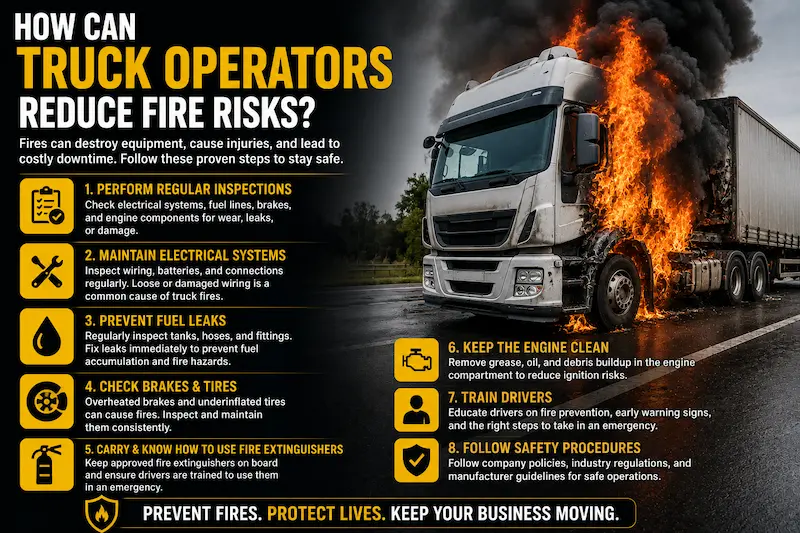
Truck operators and fleet managers can reduce avoidable risks through proper maintenance and inspections.
Maintain Brakes and Wheels
Brake components, wheel assemblies and tyres should be inspected according to appropriate maintenance requirements.
Overheating or damaged components can create serious problems on heavy vehicles.
Check Electrical Systems
Inspect batteries, wiring, connections, lighting systems and other electrical components for signs of damage or deterioration.
Inspect Fuel and Fluid Systems
Leaks involving fuel, oil or other fluids can increase fire risks and should be addressed promptly.
Follow Manufacturer Maintenance Schedules
Routine servicing can help identify developing mechanical problems before they become major failures.
Understand Dangerous-Goods Requirements
Operators transporting regulated dangerous goods need appropriate procedures, equipment, documentation and training.
Safety requirements should be based on the applicable Australian and Queensland rules rather than informal advice.
What Can Motorists Learn From the Gladstone Incident?
The truck explosion near Gladstone provides several practical lessons for everyday drivers.
Give Heavy Vehicles Plenty of Space
Large trucks require more room to stop and manoeuvre than passenger vehicles.
Avoid cutting closely in front of heavy vehicles or remaining unnecessarily beside them.
Stay Alert Around Tankers and Dangerous-Goods Vehicles
If you see a vehicle carrying hazardous materials, maintain a safe following distance and avoid unnecessary interaction.
Take Highway Closures Seriously
A major incident can result in lengthy closures. Checking official traffic information before travelling can help you avoid unexpected delays.
Do Not Rely on Social Media Rumours
During emergencies, online posts can contain incomplete or inaccurate information.
Use official emergency and road-traffic sources for evacuation instructions, road closures and diversion information.
What Should You Do During a Major Road Emergency?
If you are travelling when a major truck incident occurs:
- Slow down and maintain control of your vehicle.
- Follow police and traffic-controller instructions.
- Do not enter a closed road.
- Keep away from fire, smoke and damaged vehicles.
- Avoid stopping in dangerous locations.
- Use official diversion routes.
- Allow emergency vehicles to pass.
- Check official traffic updates before continuing your journey.
These simple actions can reduce the risk to both motorists and emergency workers.
Is the Truck Explosion Gladstone Incident the Same as a Truck Fire in Gladstone?
No. There have been multiple truck-related fires and incidents in the wider Gladstone region.
For example, a B-double truck caught fire on the Bruce Highway at Colosseum in May 2026. Reports said the vehicle was carrying supermarket food and drinks, and explosions were reported during the fire. No injuries were reported in that incident.
There was also a separate truck fire at Mark Fenton Drive in Barney Point, Gladstone, in June 2025. Emergency crews attended and the driver was able to leave the vehicle safely. No injuries were reported.
Therefore, when searching for truck explosion Gladstone, it is important to check the date, location and circumstances of the particular incident being discussed.
Frequently Asked Questions
When did the major truck explosion near Gladstone happen?
The major hazardous-materials truck explosion near Gladstone occurred in August 2024 on the Bruce Highway near Bororen, south of Gladstone.
What was the truck carrying?
The B-double truck was carrying approximately 42 tonnes of ammonium nitrate.
Did anyone die in the incident?
Yes. The driver of the ute involved in the collision died at the scene. The truck driver was seriously injured and transported to hospital.
Where did the explosion occur?
The explosion occurred on the Bruce Highway near Bororen, approximately 55 kilometres south of Gladstone.
Was the Bruce Highway closed?
Yes. The highway was closed in both directions around the affected section while authorities dealt with the hazardous scene and repaired the damaged roadway.
Conclusion
The truck explosion Gladstone incident near Bororen was a serious hazardous-materials emergency that demonstrated how a heavy-vehicle crash can affect drivers, nearby residents, freight networks and critical road infrastructure. The incident involved a truck carrying ammonium nitrate, caused a fatality and serious injury, and resulted in extensive damage to the Bruce Highway.
For motorists and truck operators, the most important lessons are straightforward: maintain safe distances around heavy vehicles, keep trucks properly maintained, respect dangerous-goods warnings, avoid emergency scenes, and follow official road and evacuation instructions whenever a truck explosion Gladstone or similar incident occurs.

1 Comment
Pingback: Bucket Truck Gladstone OR | Uses & Services