

Introduction
The ammonium nitrate truck explosion gladstone incident occurred on the Bruce Highway near Bororen, south of Gladstone, Queensland, on 30 August 2024. A B-double truck carrying ammonium nitrate emulsion was involved in a serious crash with a ute before the truck caught fire and later exploded. The incident caused a major emergency response, an evacuation of nearby residents, significant road damage and an extended closure of the Bruce Highway.
Because the incident involved a hazardous material, authorities established an exclusion zone and worked to assess the risks before allowing people back into the area. The event also highlighted the importance of specialist procedures when dangerous goods are transported by road.
This article explains what happened, where the explosion occurred, why ammonium nitrate can present serious hazards during a fire, and what the incident meant for motorists and the surrounding community.
Table of Contents
What happened in the Gladstone truck explosion?
The crash happened near Bororen, south of Gladstone, on the Bruce Highway. A ute and a B-double truck carrying ammonium nitrate emulsion were involved in a head-on collision early on the morning of 30 August 2024.
The ute driver died in the initial crash. The truck driver survived and was seriously injured.
Following the collision, the truck and trailers left the roadway and caught fire. Emergency services established an exclusion area because of the hazardous cargo. After the vehicle had been burning for some time, the ammonium nitrate emulsion was involved in a major explosion.
Where did the explosion occur?
The incident occurred near Bororen on the Bruce Highway, approximately south of Gladstone. News reports identified the crash location as being around the Daisy Dell Road and Turkey Beach Road area.
Although commonly described online as the Gladstone truck explosion, the actual crash site was near Bororen rather than within central Gladstone.
How much ammonium nitrate was on the truck?
Reports at the time stated that the truck was carrying approximately 42 tonnes of ammonium nitrate, while later safety information from Queensland’s Resources Safety and Health regulator described the load as ammonium nitrate emulsion (ANE).
Ammonium nitrate has legitimate industrial and agricultural uses. It can be used as a fertiliser, while specialised forms and products are also used in mining and explosives applications.
The important safety issue is that ammonium nitrate and related materials require careful handling, particularly when exposed to severe heat, fire or contamination.
Why was the explosion so dangerous?
Ammonium nitrate is not simply an ordinary fuel. Under certain circumstances, particularly when subjected to intense heat and other hazardous conditions, it can become involved in a violent decomposition or explosion.
Queensland’s explosives safety guidance warns that ammonium nitrate can be liable to explosion when exposed to extreme heat or fire, combinations of heat and pressure, contamination with fuels or other materials, or other conditions capable of initiating an explosion.
In the Bororen incident, investigators reported that the truck caught fire following the collision. The fire continued for hours before part of the ANE detonated. The intense heat was sufficient to damage the tanker itself before the explosion occurred.
Why emergency crews created an exclusion zone
The potential for a hazardous-material explosion meant emergency workers could not simply approach the burning truck as they would an ordinary vehicle fire.
An exclusion zone provides emergency personnel and the public with greater protection from:
- Fire and heat
- Blast effects
- Flying debris
- Hazardous substances
- Damaged vehicles and infrastructure
- Secondary fires
- Unstable cargo or containers
A 2.5-kilometre exclusion zone was established after the crash, and residents within the area were evacuated.
What damage did the explosion cause?
The blast caused substantial damage around the crash site.
Queensland’s Resources Safety and Health regulator reported that the explosion created a crater approximately 20 metres in diameter and 3 metres deep. The Bruce Highway was damaged and remained closed for four days while repairs were completed.
Damage was also reported to properties several kilometres from the explosion, including doors, windows and roofs.
The incident therefore affected much more than the vehicles directly involved in the crash.
Impact on the Bruce Highway
The Bruce Highway is a major transport route through Queensland, so closing the road created significant disruption.
Authorities had to:
- Secure the hazardous site.
- Assess the surrounding area.
- Manage evacuations and public safety.
- Inspect infrastructure.
- Repair the damaged highway.
- Establish traffic diversions while the route was closed.
The highway eventually reopened after repair work and safety assessments.
Did the explosion affect Gladstone residents?
The explosion was powerful enough to be heard and felt well beyond the immediate crash location.
Reports from the time described the blast being felt for kilometres, while residents in surrounding communities reported hearing a very loud explosion and feeling their homes shake.
However, it is important to distinguish between the blast being felt in the broader Gladstone region and the actual explosion site, which was near Bororen.
What happened to the road after the explosion?
The highway could not immediately reopen because the explosion damaged the road surface and surrounding infrastructure.
Queensland authorities carried out repair and assessment work before restoring traffic. The road eventually reopened under controlled conditions after several days of closure.
For heavy-vehicle operators, such closures can be particularly disruptive because alternative routes may add substantial travel time and may not be suitable for every type of truck.
You may also like it:
Gladstone Truck: Repairs, Servicing & Breakdown Help
Truck Explosion Near Gladstone: What Happened?
Avis Truck Hire Gladstone | Truck Rental Guide
Truck Crash Near Gladstone: Road Safety Guide
What safety lessons came from the incident?
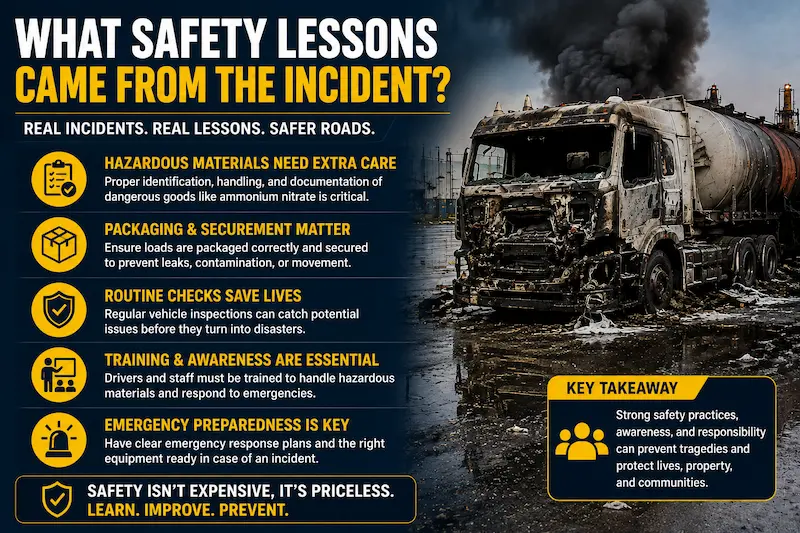
The incident provides several important lessons for dangerous-goods transport and emergency response.
1. Hazardous cargo changes the response to a crash
A collision involving a normal freight truck can already be dangerous, but a vehicle carrying hazardous materials requires additional precautions.
Emergency responders need to know:
- What substance is being transported
- How much material is present
- What risks are associated with the cargo
- Whether the load is damaged
- Whether fire is affecting the cargo
- How large an exclusion zone may be necessary
2. Fire can create additional risks
The Queensland safety investigation noted that the ANE was exposed to prolonged heating after the crash. Parts of the tanker melted under the intense heat before the explosion occurred.
This demonstrates why a burning dangerous-goods vehicle should never be approached casually.
3. Public evacuation orders should be taken seriously
When police, fire or emergency authorities establish an exclusion zone or evacuation order, people should follow the instructions immediately.
Trying to remain near a hazardous-material incident can place residents, motorists and emergency workers at unnecessary risk.
4. Roadside assistance requires appropriate training
A truck carrying dangerous goods is not an ordinary roadside-repair situation.
Drivers and motorists should avoid approaching a damaged dangerous-goods vehicle if there is:
- Fire
- Smoke
- Chemical leakage
- Strong or unusual fumes
- Damaged tanks or containers
- An official exclusion zone
Instead, emergency services should be contacted and the area kept clear.
What should motorists do if they encounter a dangerous-goods truck crash?
If you come across a serious truck crash involving hazardous materials, the safest approach is to keep your distance and follow official instructions.
Recommended actions
- Do not approach the damaged truck.
- Move away from the incident if emergency authorities instruct you to do so.
- Do not attempt to investigate spilled material.
- Keep other people away from the area.
- Follow police and emergency-service directions.
- Use official traffic information before choosing an alternative route.
- Do not return to an exclusion zone until authorities say it is safe.
The exact response depends on the substance involved and the circumstances of the crash.
Is ammonium nitrate dangerous?
Ammonium nitrate has many lawful and important uses, including agricultural fertiliser and industrial applications. It is not accurate to describe every quantity of ammonium nitrate as automatically explosive.
However, it is a regulated hazardous material and can present serious risks under particular conditions.
Queensland’s explosives safety information specifically warns about the risks associated with extreme heat, fire, pressure and contamination.
The Gladstone-area incident demonstrated why transportation, storage and emergency response procedures are important when large quantities are involved.
How is dangerous material transported safely?
Dangerous-goods transport requires controls designed to reduce the likelihood and consequences of an accident.
Depending on the material and transport operation, safety measures can include:
- Appropriate containment systems
- Vehicle and equipment inspections
- Driver training
- Hazard identification
- Emergency information
- Route planning
- Separation from ignition sources
- Emergency response procedures
- Regulatory oversight
The exact requirements depend on the dangerous good, quantity, vehicle and applicable Queensland and Australian regulations.
How long was the Bruce Highway closed?
The highway remained closed while emergency authorities and road agencies dealt with the consequences of the explosion.
Queensland’s Resources Safety and Health regulator later recorded that the highway was closed for four days for necessary repairs.
The closure caused significant disruption for motorists and freight operators travelling through central Queensland.
FAQs
What was the ammonium nitrate truck explosion near Gladstone?
It was a major incident near Bororen, south of Gladstone, on 30 August 2024. A B-double carrying ammonium nitrate emulsion crashed, caught fire and later exploded.
Did anyone die in the explosion?
The ute driver died in the initial road crash. The truck driver survived with serious injuries. Reports distinguished the fatal crash from the subsequent explosion.
How much ammonium nitrate was being transported?
Contemporary reports stated approximately 42 tonnes, while Queensland’s later safety alert identified the material as ammonium nitrate emulsion.
Where was the truck explosion?
The incident occurred near Bororen on the Bruce Highway, south of Gladstone, Queensland.
Why were residents evacuated?
Because the truck was carrying hazardous material and had caught fire, authorities established a 2.5-kilometre exclusion zone and evacuated residents within it as a precaution.
Conclusion
The ammonium nitrate truck explosion gladstone incident near Bororen was a serious road and hazardous-material emergency that demonstrated how quickly a truck crash can become more dangerous when a vehicle is carrying reactive or hazardous cargo. The crash resulted in a fatality, serious injury, evacuation measures, a major explosion and substantial damage to the Bruce Highway.
The incident also reinforces an important safety message: when a dangerous-goods truck is involved in a crash or fire, members of the public should keep their distance and follow emergency-service instructions rather than approaching the vehicle.
